Swallowing Disorders and Dysphagia – Swallowing – What Is It?
Découvrez sur Nutrisens toutes les informations pratiques dédiées à la dysphagie des personnes âgées. Sachez agir face à cette pathologie !
What Is Swallowing?
1- Oral phase: voluntary
This phase involves preparing the food bolus through chewing and salivation. The tongue then propels the bolus toward the throat (pharynx).
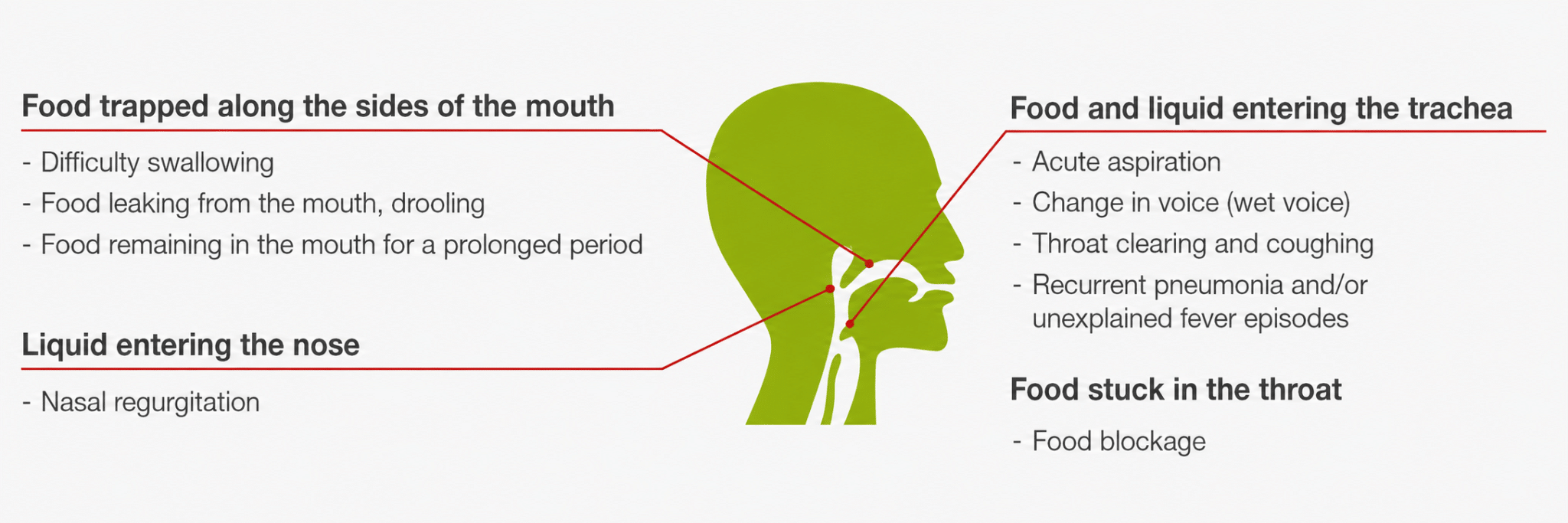
Pharyngeal contraction begins in the nasopharynx, while elevation of the soft palate prevents food from entering the nasal cavity.
2- Laryngopharyngeal phase: automatic and reflexive
The larynx receives a signal to close as the food bolus passes from the mouth into the pharynx. Contraction of the vocal cords, tilting of the epiglottis, and elevation of the larynx help protect the airway.
The food bolus then moves down through the pharynx under the effect of pharyngeal contractions and gravity.
Breathing is temporarily inhibited (apnea).
3- Esophageal phase: reflexive
Peristaltic contractions propel the food bolus toward the stomach.