The importance of nutrition in end-stage kidney disease
The importance of nutrition in end-stage kidney disease (ESRD) treated by dialysis
In 2014, nearly 11,000 new patients were treated for end-stage renal disease, an increase of 2% on the previous year. Half the patients were over 70.
In 2014, some 80,000 people in all received treatment for end-stage chronic kidney disease. Dialysis treatment represented 56% and transplants 44%.*
Diet plays a vital role when kidney function is reduced. The correct diet stabilises the metabolism and helps slow down further damage.
* Source: Haute Autorité de santé (HAS). Guide du parcours de soins. Maladie rénale chronique de l’adulte.
Protein intake
Protein-energy wasting is frequent in CKD patients and worsens as renal function declines.
This condition involves muscle wasting and diminished protein and/or energy reserves.
Some 40-60% of end-stage chronic kidney disease patients are already malnourished when they begin dialysis.
Other factors can cause malnutrition: digestive problems, loss of taste, poly-medication, anaemia (hemodialysis), chronic inflammation, infections, hormonal imbalance and environmental factors such as less exercise or inefficient dialysis.
Recommended intake for dialysis patients
| HEMODIALYSIS | PERITONEAL DIALYSIS | |
| Energy | 30–35 kcal/kg/day | 30–35 kcal/kg/day |
| Proteins | 1.2–1.4 g/kg/day | 1.3–1.5 g/kg/day |
Sodium, potassium and phosphorus intake
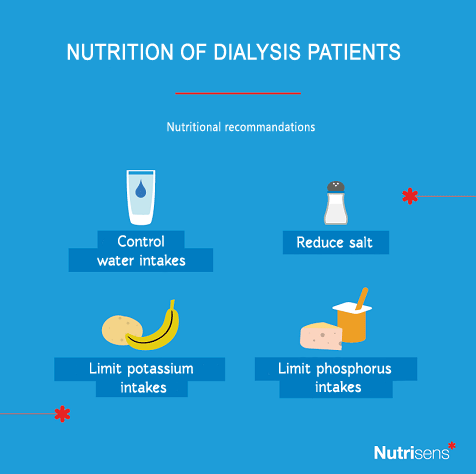
- In the dialysis patient, sodium accumulates, causing water retention and high blood pressure. A restricted sodium diet is essential. Otherwise, blood pressure medication is inefficient and weight increase in-between dialyses is too great.
- Potassium plays a role in muscular contraction, including in the heart and also helps the nervous system to function. However, too much potassium in the blood can be harmful and lead to cardiovascular disease and even a heart attack.
- Bones and teeth contain phosphorus. An excess of phosphorus in the blood can cause itching, pain in articulations and bone demineralization.
The importance of dietary advice and monitoring
Dietary advice is of prime importance as soon as the first signs of malnutrition appear and should be an integral part of patient monitoring.
Advice should account for personal factors (social environment, family, psychological factors) and should help patients take responsibility for their nutrition by setting targets.

